Blog Feed

My First Blog Post

FIRST THOUGHTS

Be yourself; Everyone else is already taken.

— Oscar Wilde.

My first thoughts on the intersection of technology and education.

The usefulness of technology in education is clear. The transformation of technology over time has created and continues to provide many options for learning. The challenge for the users of technology are to find the appropriate place to fit technology into the instruction with clear and measurable goals. The technology should be scrutinized to access if learning is the product. The technology itself should not obscure the learning.

Technology Enhanced Lesson Plan

JOHN CARROLL UNIVERSITY

JOHN CARROLL UNIVERSITY
DEPARTMENT OF EDUCATION AND SCHOOL PSYCHOLOGY
Technology Enhanced Lesson Plan

Name: Tom O’Hara
Cooperating Teacher and School: Rachael Streitman, Mayfield Middle School
Date of lesson submission: 5 May 2020
LESSON TITLE & UNIT TITLE:
Enhancing Student Communication in Civic Engagement
Effective communication in civic settings

CONTEXT OF THE CLASSROOM:
Suburban middle-school, 8th grade Social Studies.
25 students are categorized as follows:
GENDER: 13 girls, 12 boys;
AGE: 13, only a few are 14;
RACE (observed): 17 white, 3 African American, 1 Asian, 1 Turkish, 3 others;
DEMOGRAPHICS: all are presumed to be suburban, middle-income;
ACCOMODATIONS: I have no knowledge of any individualized accommodations. I cannot address a direct learning accommodation I have no knowledge of, however within this lesson are artistic design considerations for which an artistically inclined student may excel in, such as the two disconnected yet artistic students in this classroom. I did witness two students with hearing assistance devices that did not appear to hinder their learning. The Turkish student may have communication issues that may hinder deeper understanding but, I saw no difficulty when I spoke with him. He was a quiet student who had fallen months behind when he and his parents returned to Turkey, this lesson cannot address such a deficiency. I saw no apparent learning difficulties with any other student.
TECHNOLOGY: Each student is in possession of a school-issued ChromeBook and is fluent in its operation and use. I believe each student had his or her own cell phone and possessed all the technological savvy regarding its use as any suburban 13-year old. The school itself is technologically modern with computer projectors in each classroom.

At least a few cliques were noted, and I believe at this age it is important to note but these cliques exist although they may not be as stifling as high school cliques will be. Only a few might represent a difficulty to teaching. I mention the cliques because I witnessed unique behaviors from two of the three artistic students who choose to disengage from the classroom and spend more than one period sketching. I tried to engage each of them, but I could not. Also generally within this age range are challenging behaviors that are constantly in flux and as a teacher we must be aware of the developing psyche of the 13/14 year old, I think more-so at this life stage, as life expands in all directions for them more than almost any other time in their lives.

CONTEXT OF THE LESSON:
This lesson is intended to be a bridge between “Bill of Rights”, “Branches of
Government” and “Civic Engagement” with the intent to increase the ability of the
students to effectively engage in civic discourse by understanding preferred
communication techniques of participants and their own roles in civic life.

EDUCATION STANDARDS:
Ohio state education standards are:
8.19 Government – Informed citizens understand how media and communication
technology influence public opinion.
8.20 Government – The U.S. Constitution established a federal system of government, a
representative democracy and a framework with separation of powers
and checks and balances.
W8.1 Writing – Write arguments to support claims with clear reasons and relevant
evidence.

OBJECTIVES:
SWBAT Students will be able to:
1) determine best communication practices for civic engagement issues,
2) communicate effectively on issues of importance within the established framework of
civic life.

Misconceptions that I observed were a lack of understanding of how the branches of
government and their administrative departments function, in order, to create and
administer policy and law.

Concepts of civic engagement are not difficult or unwieldy and for many 8th grade
students’ volunteerism and possibly activism are familiar concepts to them. What this
lesson and following lessons will attempt to do is establish how to do this effectively
using research to find the actors, identify and refine the problem itself and most
importantly produce effective arguments for the solution.

ACADEMIC LANGUGAGE:
The language of civic life is specific and will require scaffolding.
Agenda
Ordinance
First reading/second reading/passage
City Councilperson
Mayor/City or County Manager/Governor/President
State Representative, State Senator
Federal Representative, Federal Senator

ASSESSMENT OF LEARNING

Pre-assessment(s):
This Civic Engagement lesson is positioned near the end of a semester of study of American Government that has included the Constitution and Bill of Rights and the framework for the Branches of Government including federal, state and local governments as such, pre-assessment for this particular days’ lesson is minimal, however the “question of the day” will ask students to define Civic Engagement. This will allow me to understand whether the students can start to formulate an idea of how civil engagement is situated within what they have been previously learning.

Formative and summative assessment:
Formative assessment will occur as the result of a short 5 question quiz at the end of the exploration and will ask students to link a topic of concern with the branch and official which would be the most effective in affecting change, see appendix 1. For example, the classroom identified a number of concerns such as animal rights, gender equality and gun control and students will decide which person, body or department will be most effective in adopting a solution.
Summative assessment will occur at the end of the lesson when the class will produce a video which addresses civic engagement in the topic area chosen by the class.

Differentiation of assessment:
Within this particular classroom and for this particular lesson I saw no obvious need for differentiation of assessment.

Feedback:
This lesson is an internet research exploration and as such I cannot imagine assessment feedback identifying many deficiencies in students in the accomplishment of this particular lesson.

INSTRUCTIONAL RESOURCES, MATERIALS, & TECHNOLOGY INTEGRATION
Chromebooks for internet research, document, video and cartoon creation.
Maps of local, state and federal legislative districts
Biographical information on officials

INSTRUCTION

Preparation:
Each student has their chomebook or pc’s on hand with an established internet connection.
District maps for federal, state, and local legislative districts along with pictures, resumes & bio information on each representative.

Introduction to the lesson:
This lesson will address civic participation including activism, volunteering, and voting. The lesson follows the Constitution/Bill of Rights and the Branches of Government. Today students will explore issues of importance to them i.e. gender rights and equality, environmental concerns, political rights as a person, environmental rights as a member of this planet, governmental rights as a citizen. We will examine the issues the students bring forward. The students will then vote and rank the issues. We will then assign those issues to the appropriate civic organization, elected official or department most likely to be working on solutions. This lesson will explore authentic issues for the students, the goal will be to ultimately address an authentic audience in a legislative official, body or community organization.

Body of the lesson:
Technology modifies pedagogy, and can create new types of knowledge, Di Blas, et al., The technology used in this lesson is the computer and its affordances of the internet search, the knowledge that will be created will be primarily to help students develop a deeper understanding of the branches of government, the associated departments and social service organizations and their relation to civic engagement. The search is the simplest of affordances and is equivalent to Saloman and Peck’s concept of effects with technology, it only lasts as long as the technology is present where the only learning happening here is remembering where the search bar is and how to use it. How this changes my instructional approach is that I become a supportive tour guide for the student search and to keep them on-task and moving forward to completion of the research.

Student outcomes are to identify federal, state and local representation and social service organizations that are or have taken responsibility for social issues. Students will identify major departments and officials through federal, state and local levels with the aim of understanding which department or organization and with whom effective civic engagement occurs and what type of engagement is appropriate for the action to be undertaken i.e. volunteer, direct action, or voting.

The general outline of activity for the lesson will be: 

1- Issue of the day – guided discussion on a topic of civic interest.
2- The issue of the day will lead into a discussion of who is responsible for finding a solution to the problems identified.
3- Internet ‘treasure hunt’ to identify people and organizations that are resources for solutions.
4- Plicker questions to check for understanding on the ‘chain of legislative command’ i.e. local, city and county, state and federal governments and similarly placed social service organizations.
5- Exit student question of the day, what did you learn that you did not know and what question does this knowledge lead you to ask.

I believe Civic Engagement is an ideal venue for showcasing the ideas of distributive cognition as civic engagement does not happen independently in a vacuum but with multiple actors in a range of authority roles engaged in viewing a multitude of contexts and by utilizing technology to identify, develop solutions for, communicate with and mobilize citizens to action. The technology used in the research and identification of issues is far more efficient in terms of time and information quality than any previous methods and may only be readily available through technology. The current use of the internet and various databases to find contact information is ubiquitous and is practically ‘light years’ beyond previous methods. Students use that technology with ease showing that the cognition and learning that is occurring is happening through what Salomon and Perkins call ‘the effects with technology’, that knowledge is being created through the effects of working ‘with technology’. The distribution channel for knowledge is happening with the technology itself. The research function doesn’t change the learning function. However, with this the teaching function changes into one of supervision and scaffolding students to guide them in the production of relevant knowledge for the assignment.
The cognition that is distributed with the technology in this lesson presented here is not interactive with the student which would be optimal but only reactive to the student inquiry. I don’t believe this reactive/interactive element is significant or relevant in the creation of knowledge in this example but merely a support. I see it as paint on the palette and not as a finished piece of art.
For learning to occur elements are brought to us over multiple channels, they are chosen by the teacher for their particular value to the learning. Digital storytelling is a concrete example of these multiple ‘channels’, audio, visual, the spoken word. Within each of these realms there is the knowledge of worthy and effective teaching techniques that the teacher initiates, there is the content, context, milieu and culture of the student and the impact of those things on learning and there are also the things we use to teach with; books, web-sites, pencils, technology, anything that aids in learning and understanding. So, within digital storytelling there is the teacher who stands as Conductor overseeing the successful completion of the journey by making sure the learning map is clear, understandable and can accomplish the educational goal. It is the Conductor who knows the most effective means of teaching so that learning may occur within multiple contexts and for all students. The train the conductor is overseeing has two roles, first it is a vehicle for transport, its purpose is to take us from ignorance to enlightenment. Everything about the train supports or detracts from our learning and knowledge acquisition, the train car is our context for learning. The train itself is the affordance we use to get from station ignorance to station enlightenment, its engine, the rails and the landscape it traverses are the affordances that help deliver to us knowledge on our educational journey. We did not build the train or lay the rails, but we use them both to help us get from one to the other, we give both an implicit go-ahead to take on some of the learning for us. The knowledge of the engine builder or the work of the track layer is in effect transferred to us but only so far as we need it to deliver us to our enlightened destination.
Feedback:
Civic engagement is somewhat nebulous, it does not provide a concrete 2+2=4 answer, it cannot test its scientific theory or give us a particular philosophical passage to ponder our existence. Therefore, feedback I think has to be evaluated differently. It would be great that as a result of some civic engagement we could point and say this building stands because we cared and became engaged in its preservation or this law now exists because we had the foresight to see the need and the solution. I think I would propose a single question at the very end of the entire lesson, “Do you now feel as though solutions to pressing civic issues are obtainable?”

Closure:
Students have been assessed throughout the lesson and misconceptions, lack of understanding and deeper reflective questions have been addressed.

DIFFERENTIATION OF INSTRUCTION
What the students are asked to produce in this, particular lesson is to identify federal, state and local officials and departments through internet research which is attainable by every student in the classroom. This individual lesson will culminate, as we research topics and find contacts in the creation by the entire classroom of a WeVideo production that will present the issue before an authentic audience. The video will afford student choice in various production duties, i.e. storyboarding, script writing, clip research and compiling, music and audio, and production and directing.

RATIONALE
I found the rationale for this lesson in my classroom observations both this semester and last and within my personal life-experience, and that is; most students, and adults, do not understand the workings of the various levels of government, their branches and departments and this lack of understanding impedes their ability to become civically engaged and effective civic leaders. This lesson attempts to clarify this lack of understanding and put in front of the students the framework for civic engagement in relation to the branches of federal, state and local governments. I believe the most effective way to bridge this gap is through internet research and to cement this learning in a culminating lesson using WeVideo as a class project to present student concerns to a civic body, either legislative or non-profit. This is the introductory lesson in effective civic participation.

Appendix 1: Post-lesson quiz

Match the community concern with the level of government, department or social service organization.

Puppy mills County Government ASPCA
Gender Equality State and Federal Government Labor Departments in each
Gun Control State and Federal Government NRA
Environmental Issues All levels EPA, solid waste departments
Neighborhood Issues Local homeless shelters, food banks, etc.

References:

Harris, J.B. et al., (2010) “Grounded” Technology Integration: Instructional Planning Using Curriculum-Based Activity Type Taxonomies, Journal of Technology and Teacher Education, 18(4), 573-605

Hull, G.A., Nelson, M.E. (2005) Locating the Semiotic Power of Multimodality, Written Communication, 22(2), 224-261

Koehler, M.J. and Mishra, P., (2005) What Happens When Teachers Design Educational Technology? The Development of Technology Pedagogical Content Knowledge. J. Educational Computing Research, Vol. 32(2) 131-152.

Martin, L., (2012) Connection, Translation, Off-Loading, and Monitoring: A Framework for Characterizing the Pedagogical Functions of Educational Technologies, Tech Know Learn, 17, 87-107

Morgan, M. et al. (2006) Applying distributed cognition theory to the redesign of the ‘Copy and Paste’ function in order to promote appropriate learning outcomes, Computers and Education, 50, 125-147

Salomon, G. and Perkins, D., (2005) Do Technologies Make Us Smarter? Intellectual Amplification With, Of, and Through Technology. In R.J. Sternberg, D.D. Preiss (Eds.) Intelligence and Technology, The impact of Tools on the Nature and Development of Human Abilities (pp.71-85 ). Mahwah, Lawrence Erlbaum Associates, Publishers.

Distributed Cognition

Does technology make us smarter is far too broad a statement, within that question we need to define what smarter is and what technology we are using to bring us to some “smarter” place. The idea of a device or technology making us somehow smarter goes against my personal concept of what makes a smarter human however within  the readings of Salomon and Perkins, and Morgan et al., and Martin we begin to see through their research that yes it might just be possible for us to say technology makes us more efficient in our processing and manipulation of information so that deeper learning may occur. It does not, I believe increase or augment our mental abilities to become measurably ‘smarter’. Even as we are examining Salomon and Perkins idea of ‘effects through technology’ when our performance has been fundamentally reorganized can that be said to have made us smarter? We have used technology to reshape, reorganize and change our knowledge but that I believe is as close to making us smarter as technology gets us. As a result, we now know, something differently, something we did not know before, but I still am not sure that is just change or has actual learning been accomplished?    

Morgan et al. brings to the discussion of distributed cognition the idea of the “Copy and Paste” function to promote appropriate learning outcomes. The meaningful processing of content for understanding. That I believe is learning yet this particular research experiment I find more difficult to work into my understanding of how technology functions to support learning and how a redesign of the function itself ”to embed an effective interaction strategy…into the interface”, makes us smarter or again just more efficient. This idea, I believe, is similar to Salomon and Perkins concept of “effects with technology” whereby learning is amplified while a tool is being used, our effects are amplified while we use the technology to assist in the ‘copy’ function. Morgan et al. and their ideas about embedding within the interface an effective interaction strategy; the ‘paste’ function is similar in concept to Salomon and Perkins ideas of “effects through technology” where performance is not just enhanced but essentially reorganized to create a new learning paradigm.  

In Martin’s work it is proposed that the translation of information through the reliance on the connections of and between systems to communicate can be thought of as pedagogical functions. Will this translation through technological means make us smarter? I think possibly it may but that is dependent upon the quality of the technological translation and the human actors involved.  It has been my personal experience as a City Planner in local government where every day I, and others who shared my workspace, had to translate information for a variety of individuals who almost never possessed an understanding of the base information. The experience allowed me the opportunity to perfect my translational abilities and observe others I worked with who never adapted their approach or technology to aid in the translation. I relied heavily on visual systems, drawing, text or pictures. I usually began with simple sketches done with pen and paper, moving on to the use of scaled drawings or aerial photographs and finally the individual usually left me with printed information they could later process on their own. These were technologies that I used in a distributive cognitive fashion, that is using technology to augment and change the nature of how different people needed to learn. And this process would take on wholly different dimensions should I be answering questions over the phone, the most difficult representational system for this process. There were also many times I had to present this information to individuals, for who, English was not their primary language, bringing together a sort of shorthand visual communication to help them understand rather complicated municipal law.

During the duration of this entire class I have been reflecting on the variety of learning and teaching experiences I have encountered and the variety of technologies used that have modified the learning that has or has not taken place and specifically how learning for me has changed this school year as I have become more adept with the affordances of the technology I use to produce work. I have been contemplating the differences in school, public, work and individual experiences and how each of those experiences fit into Martin’s conception of connection, translation, off-loading and monitoring. I liked the idea presented by Kirsh within the Martin piece about cognitive congeniality, the way I understand it is, that no amount of translation, no matter how many ways I transform the information, learning will always be difficult if the representational systems being used are not translating the knowledge in a manner that is accepted in a cognitively congenial manner. Often in my experience working to literally translate a specialized information and literature to an authentic user I had to present the information in many forms, and I often had to ‘step back’ and evaluate the technique to see if understanding was occurring. Out of that experience I learned almost intuitively that the more I imparted the information to others the more I learned the information, something Chin et al. used in the formation of the idea of Teachable Agents in that people learn well from teaching and connecting that teaching to others using nodes and links. This idea was also present in the wetlands video as one grade was responsible for teaching the next what they had learned. I would understand the concept as the ‘teacher’ is now the ‘technology’, the teacher is the plus and learning is occurring “through” that individual.

I have also been reflecting on the nature of learning in highly structured settings under high levels of stress. I have been contemplating how learning occurred in the highly stressful world of the military where the learning had to be mastered. How was the ‘connection’ that Martin proposes actually embedded within me, how was the information that was translated absorbed in ways that defied his concept of congeniality and at what point was the information accessible to me to a degree where off-loading began and monitoring could then be applied? I still remember 40 years later how to stand at attention and how to perform an about face, and I bet it wouldn’t take long for me to remaster the ability to take apart an M-16 is this an effect through technology?. I bring these divergent ideas into the discussion to show the opposing forces on how learning takes place in real world adult interactions and how they may be applied to classroom cognition. As Martin says interoperability between systems often requires careful specification of data formatting and/or extensive translation. Within the classroom I need to understand how these systems are interpreted between and among users and what that means for learning and how those systems assist in distributing cognition across them.

Coordination is an idea developed in Martin’s work, I see it as the umbrella for the other factors he develops that are initiated as a result of the coordination between systems such as translation, off-loading and monitoring, but again do these things make us smarter? Translation moves the information into a format that is cognitively compatible with the learner, so we may understand more because the concepts are compatible with our learning patterns. Off-loading is the ability to allow the connections functional independence separate from the learner, this I believe is closer to the idea that we can be made smarter through technological affordances. For Salomon and Perkins they refer to this concept as the ‘effects of technology’ meaning the coordination remains even if the technology is removed. Off-loading increases the ‘efficiency of some parts of the system’ by modifying either the person or the cognitive system leading to individual change and to a place I believe learning can occur. This idea I believe is the key to distributive cognition, being a person plus and utilizing that plus capacity to off-load some of the more tedious or difficult learning processes to increase the likelihood for learning to occur.

Monitoring through or with technology identifies the quality of coordination between systems and provides the information as essential feedback. Monitoring identifies information gaps or as mis-matches as Martin refers to them. I believe this is an important pedagogical function missing from Salomon and Perkins ideas: of, with and through technology. Although I don’t believe any of this makes us smarter it only changes the ‘how’ we learn, yet some would argue that the ‘how’ is indeed making us smarter.

I like the idea Martin discusses regarding the clever lesson design choices that can be made when an understanding of what technology does and does not do for and within a unique pedagogical approach. He says “designers can carefully orchestrate the distribution of pedagogical “responsibility” across multiple actors in the system” including the teacher and what the teacher brings into the discussion relative to their own knowledge of the systems and to be cognizant of the position of technology within learning.

So, to the question, ‘Does technology make us smarter?’, I would answer unequivocally maybe. In some ways the technology gives us through its affordances an ability to be more effective learners and in some instances those affordances may fundamentally change the way we think and that may be said to make us relatively smarter than we were prior to the technological intervention, but ‘smarter’? The educationalists would say yes but the philosopher in me says “at what cost” do these technological enhancements make us smarter?

Observing: an 8th grade class

Synthesize what we have been reading and discussing in class about student multimodal composition / digital storytelling with the unique small group dynamics and technology use in the classroom where you are observing. What are the pedagogical implications for the integration of digital storytelling / multimodal composition into a unit of study? (~ 500-750 words).

Multimodal storytelling brings together the range of storytelling modes; the word, the song, the image and unites it with an ability to include many voices. It is the multiplicity of modes and voices that is the strength and power of digital storytelling. Telling a story that affects us on many levels of experience has the potential to unite us as well. Within a small group classroom assignment the potential of digital storytelling is that each track of the digital story can be thought of as a voice unique to each student producing the story. Each student shares visual and auditory space with each other student and their united voices form a new shared experience in storytelling, much like the video game was a shared experience, this is an experience that can be more powerful if produced collectively rather than independently. As a communication tool, the digital storytelling method can be an immersive event for the viewer/participant. And for the producer, the digital story offers a multitude of entry points, visual/audio/written into the process of creating meaning and opening the craft of storytelling for more students to be producers of knowledge and meaning. A digital story offers and affords students opportunities to layer individual meaning into a larger story mosaic through image and sound. The digital story offers the group an opportunity to layer and braid; graft and glue together a multitude of voices and stories. Further, using the digital story as an instrument of social change the method holds a variety of possibilities for student learning and civic engagement in a social studies classroom setting.

The digital story telling process can bring in new voices around the campfire but the process must still be evaluated somehow? Are my students learning how to tell a story? Are they learning the process of collaboration? Are they using this knowledge to become citizens?

Observations of three 8th grade Social Studies classes, consisting of 20-25 suburban students each, for a total of 29 hours over 5 weeks. The students had produced the week before classes were cancelled a traditional pen and paper poster project as the culmination of a unit of study regarding the Bill of Rights. Had I left at that point I would have witnessed very little use of technology in those classrooms for that particular project, a conscious pedagogical choice, I believe, that created a fully accessible lesson. The next unit of study was a civic engagement assignment centered on political activism. I observed for only a few hours the students working on this project but it showed me how easily students shifted from gallery walks and traditional forms of instruction in the previous unit to showing their real strengths in using technology, i.e. their Chromebooks, to produce internet research and authentic work. Each group of 3-5 students in the classroom had little difficulty finding research on their given topic or how to find contact information for the elected officials which was part of the assignment. Many students found, seemingly simultaneously, elected officials preferred using email, and this information spread rapidly among the groups. Some students or groups were choosing to use the phone to contact their representative, I found the phone use interesting, but I was unable to follow up as to the difference in choice. It was interesting to watch how once the knowledge of sending an elected official an electronic communication spread first through a single classroom then through the subsequent classrooms. With teacher scaffolding internet-available information resources and the ubiquitous Google searches student learning needs were provided for that met their needs for their exploration of how ‘changing law’ begins. Watching the members of these small groups interact for the purpose of researching, delegating, and deciding topic points was interesting in the group dynamics of role choice. Once the students were in command of their research topics members of the group worked in a generally independent-dependent manner in loose cohesion with each other with each researching what they needed, and when they remembered also sharing what they needed between their group members and just as easily between other students and groups. As 8th graders these students were experts at the group projects that much of middle school required of them and they had spent years tolerating their groan-inspiring necessity. I witnessed how quickly the roles were formally and informally adopted or assigned within the groups. The implications on teaching seemed to be to stand back and let them race down roads they were already familiar with, aware of the lanes but not yet wary of the potholes, so it would be my task to keep them pointed on the right road, scaffold them to find the best resources, and to keep them focused on learning the craft of storytelling and the art of cooperation.  

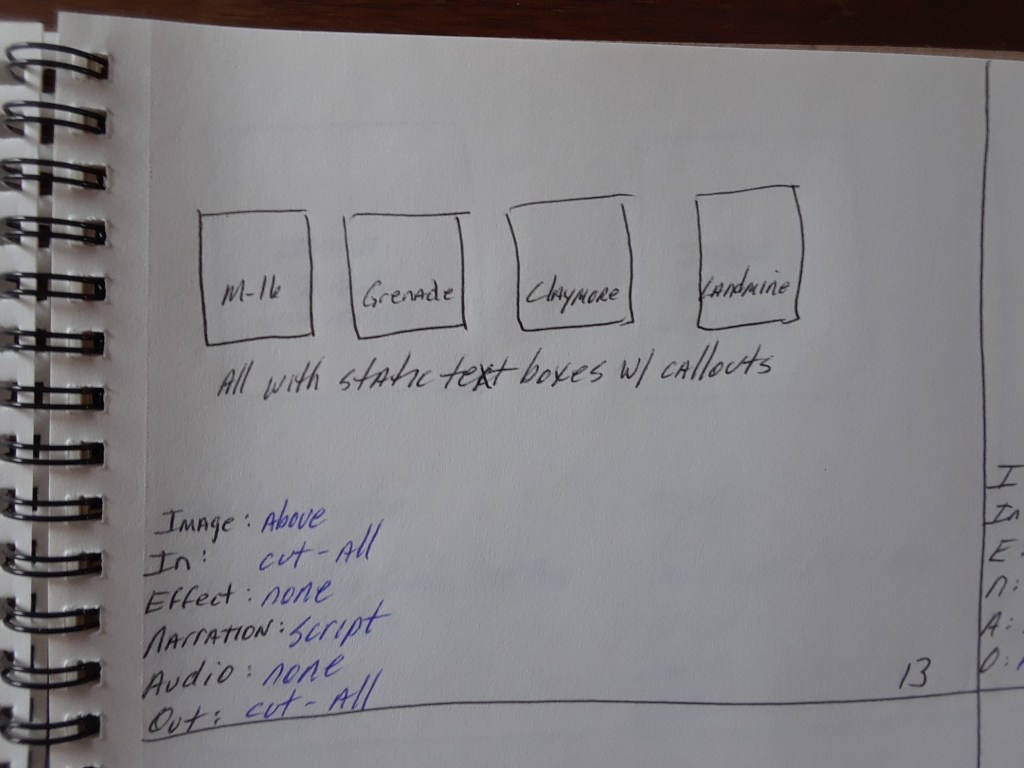
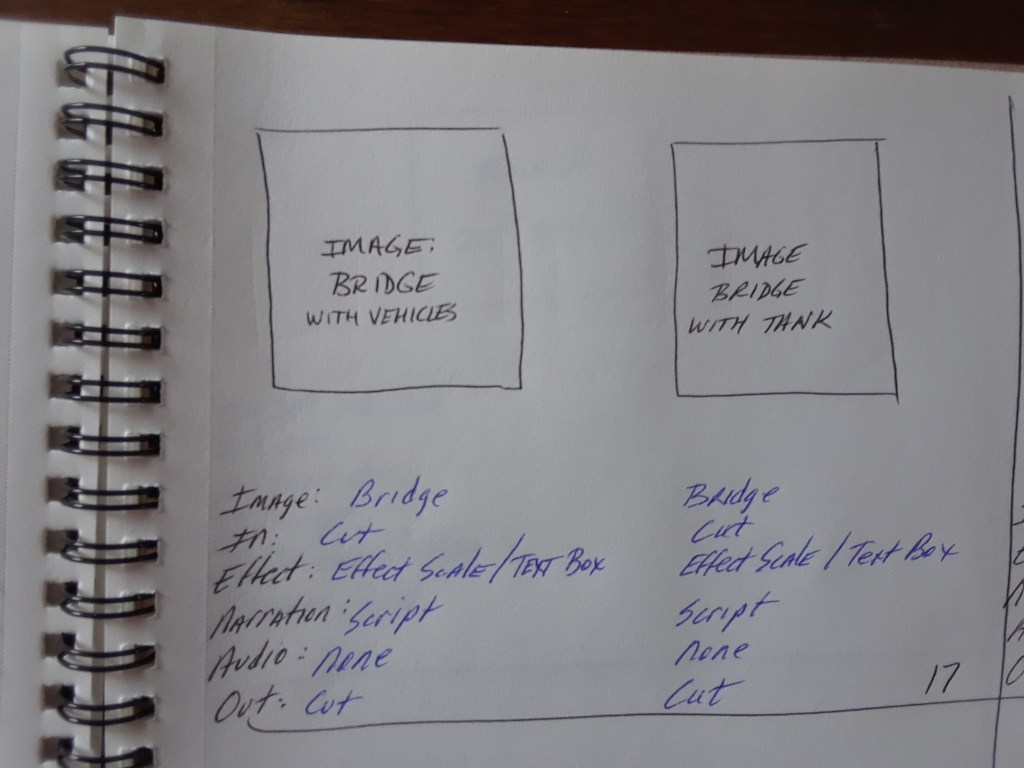
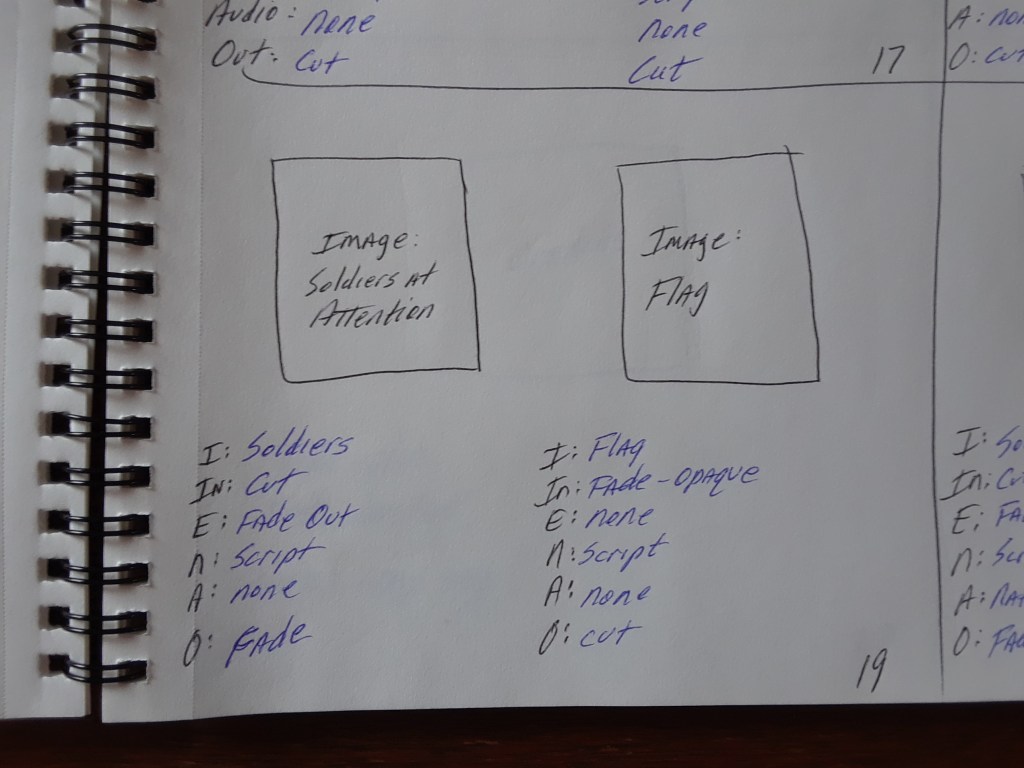
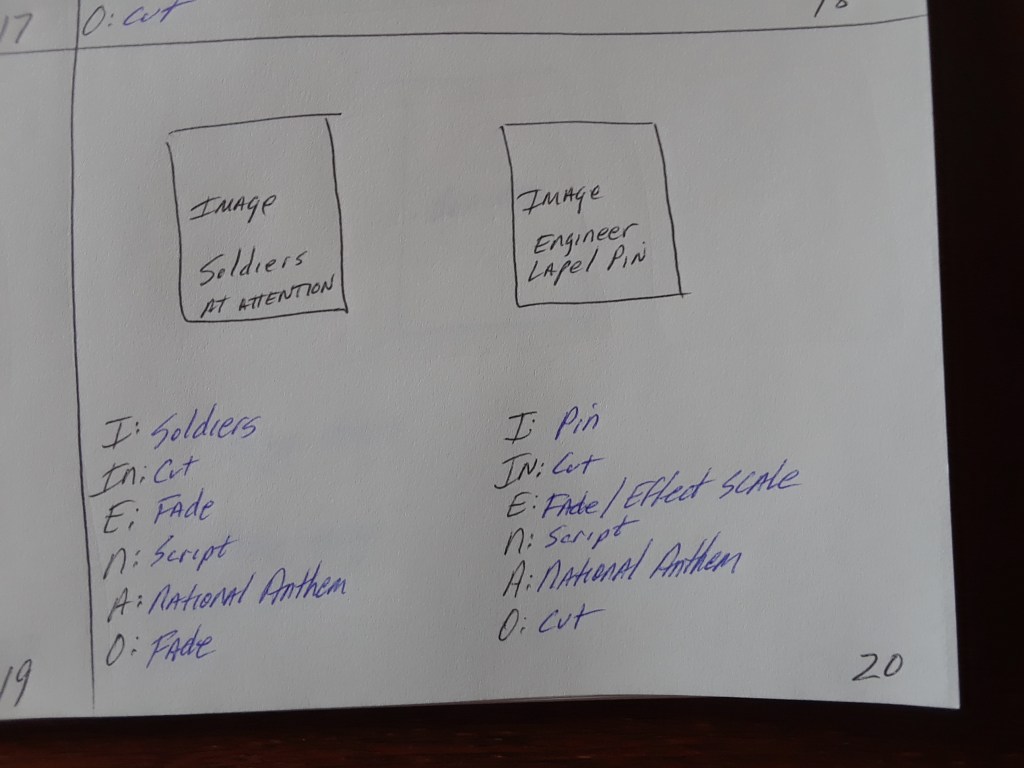
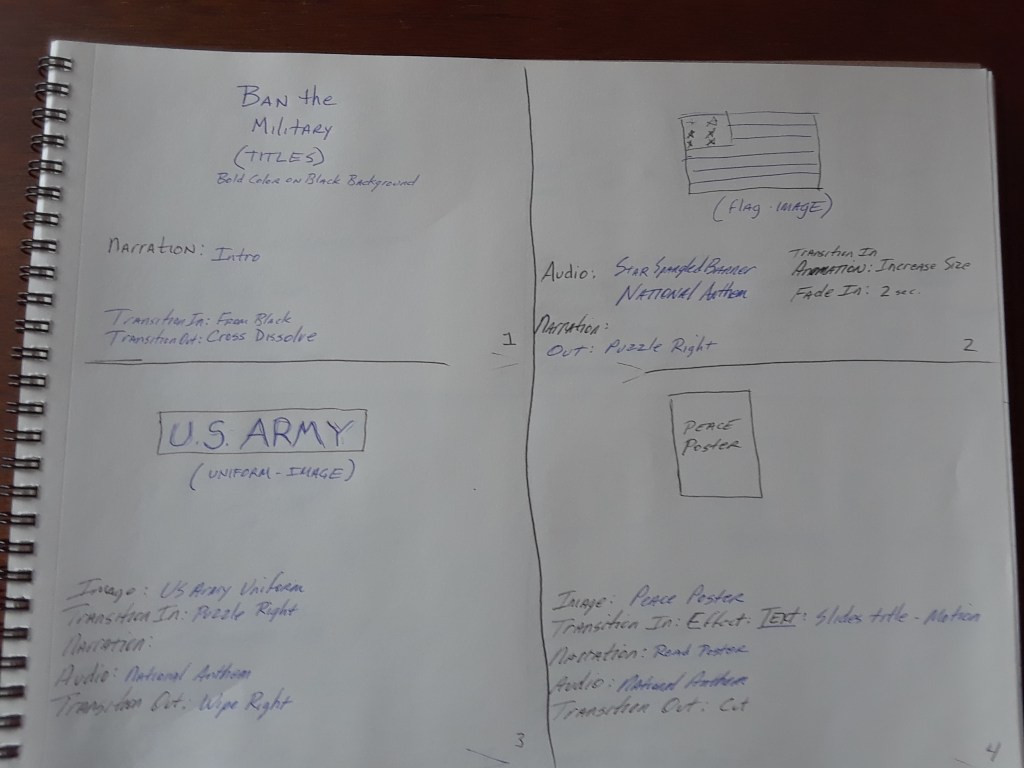
The Storyboard; a blog.

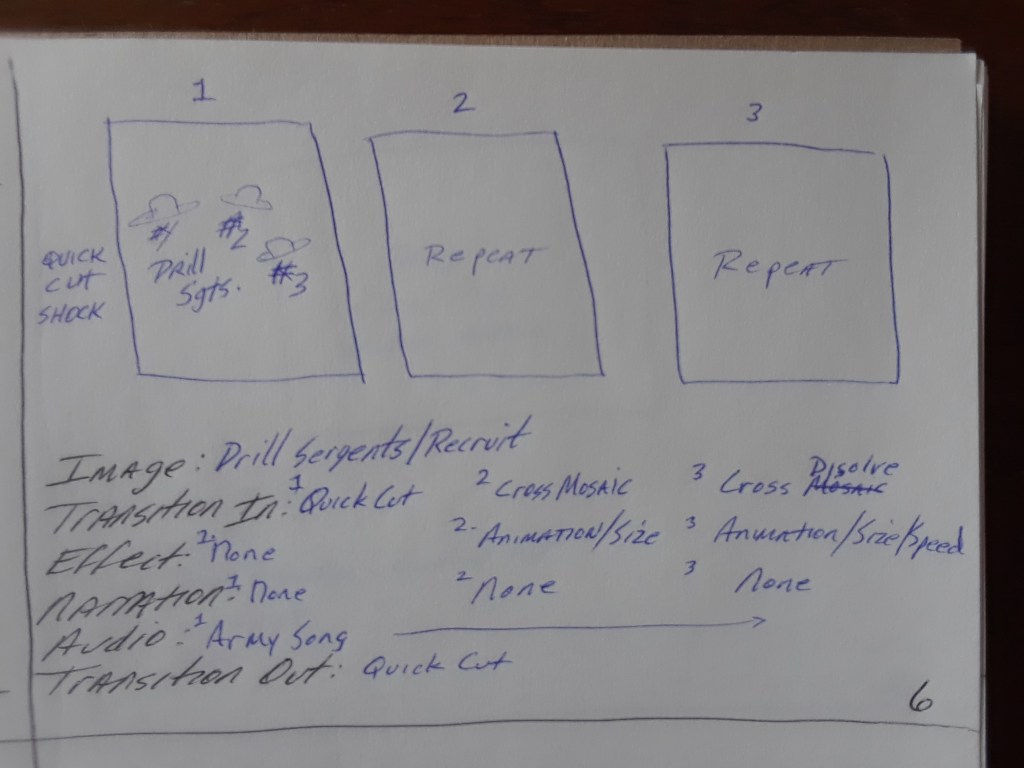
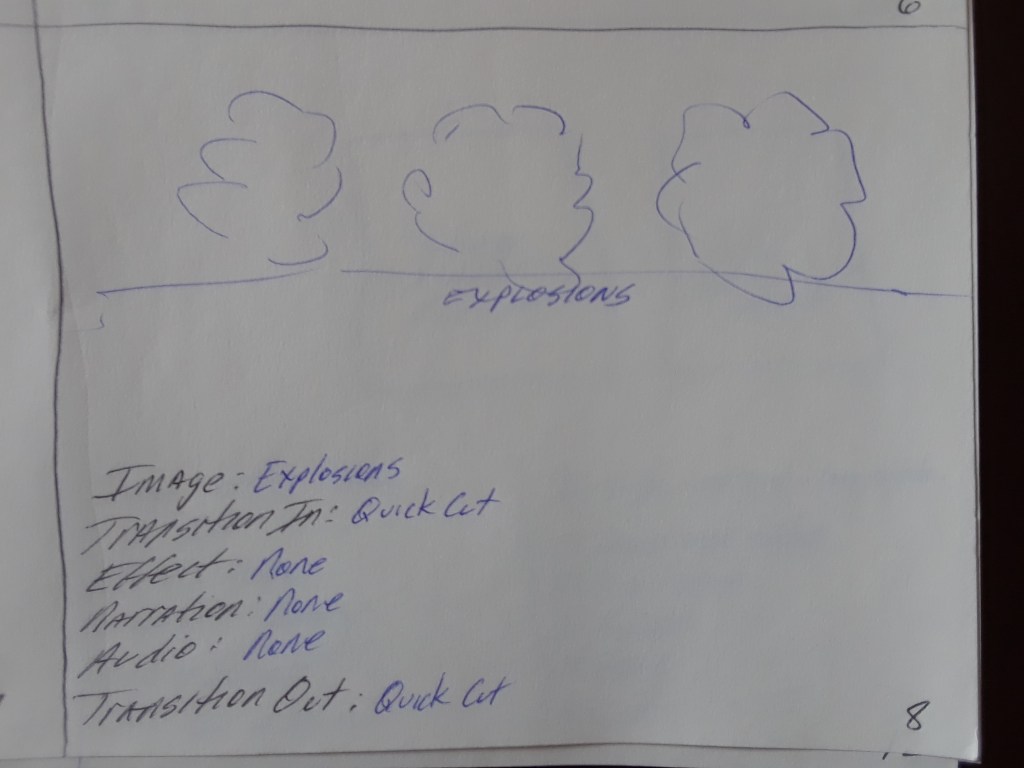
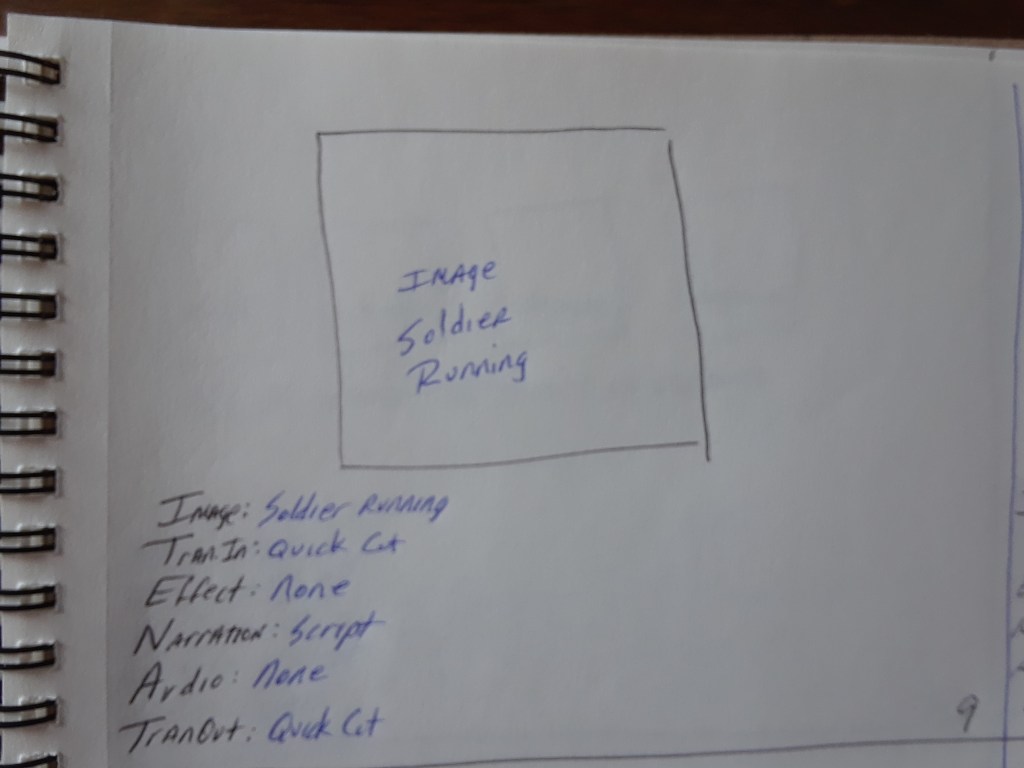
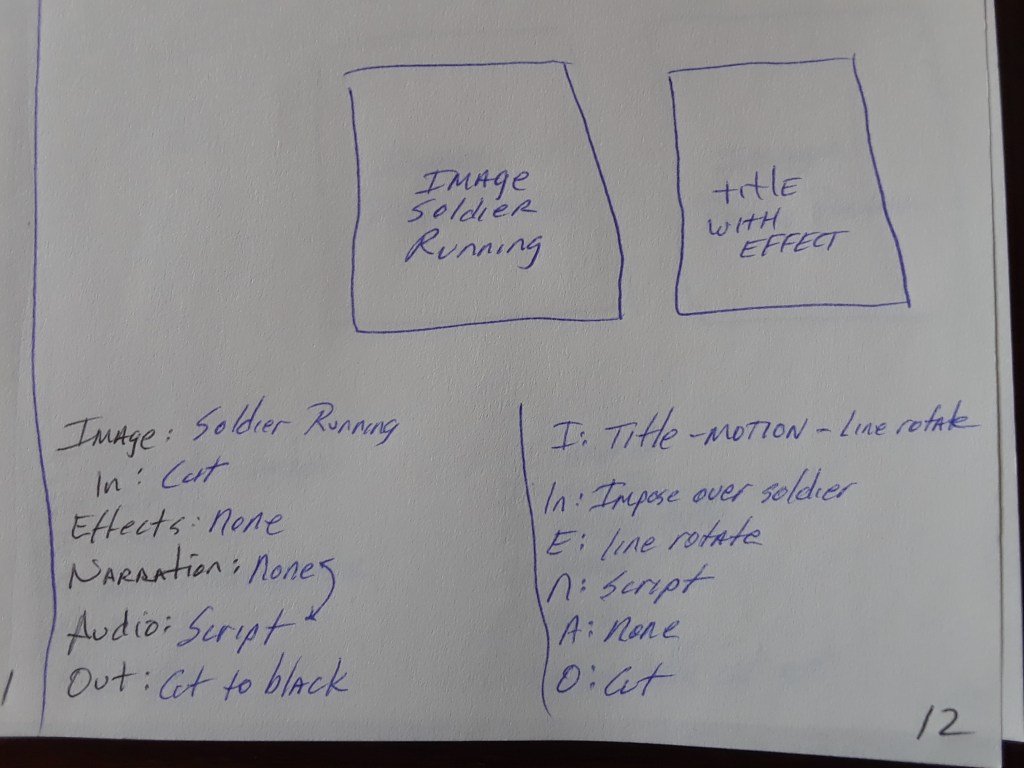
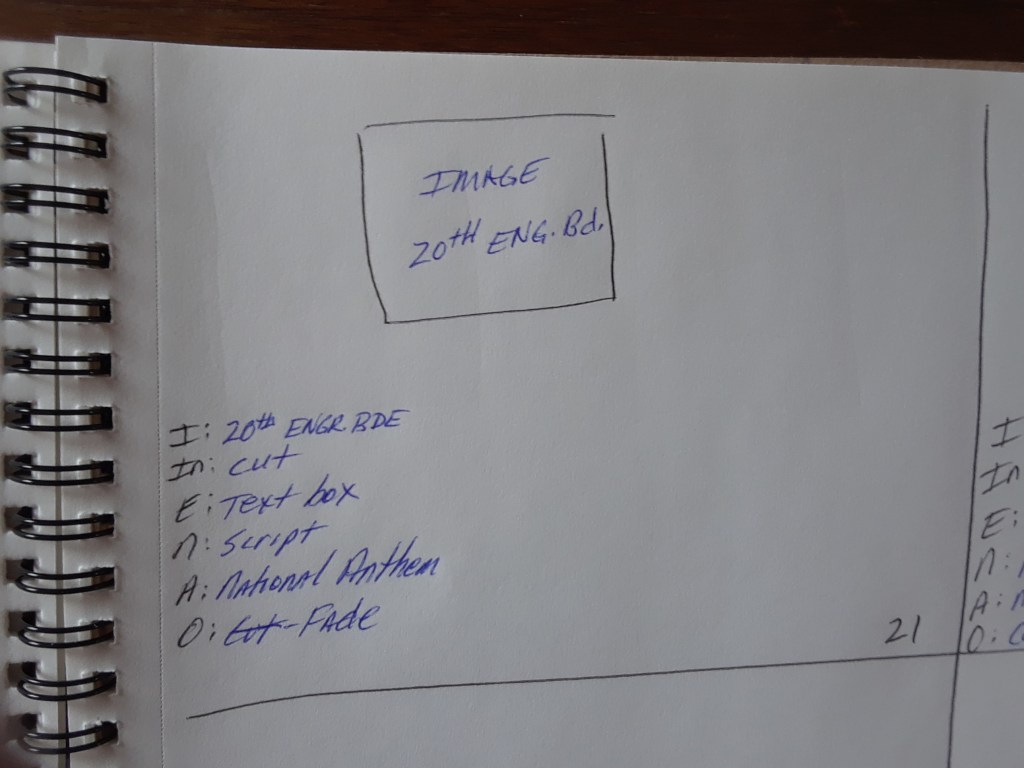
Note: During the creative process for this exploration I found brainstorming with paper and pen more creative and through that process a handwritten storyboard was created and is what I preferred. The complete storyboard will be published under: Storyboard; the panels.

Peace Poster

Story Circle One – Digital Storytelling Script & Storyboard

For this assignment, you will create two interrelated blog posts. One for your digital storytelling voice-over narration (~250 words), and another for your storyboard (text, visuals, SFX, music) for your digital story (500 words +). Adjacent to or embedded within the script, detail the integration of modalities not limited to text, still images, video, and audio (sound effects and music).  From your script and storyboard, it should be evident how you intend to construct meaning within and across the modalities selected for your digital story.

Story boards are used to construct the broad meaning of how a story will be told through graphic  elements, visual imagery and audio symbolism. A storyboard is a guide, a blueprint for the construction of meaning through the elemental layering and braiding of available technique in the telling of each unique story. The construction of meaning occurs through the use of still images enhanced by the use of voice-over narration, text graphics, editing and effects techniques, and audio layering. The layering and braiding of information with modalities to construct meaning occurs from the initial idea conception and storyboard through the design choices available as affordances in the software. The braiding of still images and audio recordings in my digital story are elements creating ideas of patriotism, military service experiences, and social philosophies to build a universal story of personal change that constructs meaning for viewers that show the bridge between military service and personal growth. Using images of the flag, military uniforms and audio playback of the national anthem is used to establish the idea of patriotism. Braiding is evident in the use of video track #2 to hold those higher ideals shown in the peace posters. Braid threads are three layers of video tracks and two layers of audio tracks. Layers interact with each other to make emphatic statements. Transitions and effects also interact and provide interesting movement to a scene and the overall story. Transitions were specifically  chosen for what they provided to telling the story, i.e. the rapid dissolves and cutting of the 1st drill sergeant scene show how the soldier is torn down and rebuilt, a universal concept for anyone in military service. The general use of quick cuts in the middle section provide the constant jarring motion that is part of the universal basic training experience. The use of the fade out is another technique used at points where the viewer is meant to linger upon the idea presented.

Script for Voice-over Narration

Ban the military that is what she had written on her paper. That is how She had answered the question.

Something she felt strongly about

Something she wanted to see changed

Social Studies a civic engagement lesson.

She was a 14 year old 8th grader

she like all her other classmates had never known a time without war

her middle income classroom consisted of 10 white, 2 Asian, 3 African-American, 1 Turkish student and 2 unreported, Gender breakdown was 10 girls and 8 boys.  Her name was Maren and I understood her concerns, I had never lived during a time of peace either and I was four times her age, it broke my heart. But did she know what she was asking.
I had conflicted feelings about her comment, I had served. My father had served. Serving for me was bound with feelings of patriotism, pride of accomplishment and a sense of responsibility.

It is called a tour of duty, I never thought until now how incongruous those two words are together. My tour began thusly:

I received, what I have held as valuable my whole life was a great deal more than just money. And it all started like this.
What do you think this is soldier a vacation at Disneyland? U.S Army basic training, mine was 16 weeks of mostly terrifying rigid regimentation to the Army way. Did you shave this morning soldier. My knees knocking together in sheer terror as my voice creaked out a feeble yes drill sergeant the brim of his Smokey Bear hat hitting my forehead as he shouted at me. The drill sergeants rarely spoke and often yelled. I turned 20 years old in basic training, there was no cake, no stupid songs. It was exactly 38 years ago this Tuesday and some of the memories are as vivid as yesterday. I was never going to be a great soldier but I was a good one. I was going to be a Combat Engineer. I was going to learn how to build things and blow them up. A unique combination for which there is no civilian equivalent. I was going to wear the Engineer Castle. The insignia of an Army engineer. My specialty was Bridge Crewman, I would learn how to build bridges. But before then I would learn and accomplish things I couldn’t even dream. I would eat scrambled eggs packed in a can, I would learn how to kill and keep from being killed, I would learn that if I didn’t shave those three chin whiskers a drill sergeant would be in my face. And I would learn about pride in my accomplishments. I would learn what espirit de corps really means and that there is no greater team than the one you trust your life with. Did Maren know these things? Did she know the individual? Did she know how many men and women became the best versions of themselves when faced with the challenges of military service? I had always agreed with her premise of banning the military, there had never been a just war, just egos and brutality. Yet the best version of myself was forged on a remote Army base known as Fort Leonard Wood. Sixteen weeks just four months and I became a soldier, a potential unit of death. I was lucky I had never served in time of war. But I still learned how to fire a weapon, set a land mine, build bridges and work as a team. I learned things I’ve since forgotten and never forgot the thing that mattered the most, accomplishment. After climbing under barbed wire and over obstacles, after being sleep deprived to the point there was nothing left but adrenaline to hold my eyes open I learned what it means to be a part of something that was so much more than myself. After 16 arduous weeks May 16th finally came, graduation day, it was as is said the first day of the rest of my life, everyday there after was different, the experience made sure of that. I stood rigidly at attention the drill sergeant in front of me, the same one that had been shouting at me for the past four months making me a soldier, pinned that castle on the lapel of my dress uniform and the national anthem played I held back a tear of pride, my throat clenched and that was the day I became a soldier, a man, an adult that could face squarely and overcome decisively any challenge. I blinked the tear away with my shoulders back and my chest out proud.

Assessment Blog

Art and beauty are in the eye of the beholder.

There is my video project and then there is the criteria that I would use if I were to design a digital storytelling project for my classroom. In my storytelling project I connected a civic engagement project for the 8th grade class I was observing and a personal event from my past. The classroom assignment was to find an issue they felt strongly about and propose a change or modification in existing law or policy, or to propose a new law. The students individually compiled an impressive range of topical events between themselves with which to apply this civic engagement project. Abortion, gun control, gender equality, the environment were topics of interest but the one that caught my eye was “Ban the Military”. I served in the Army and I agreed with the philosophy of her comment, but it made me wonder what she knew of the military. She was young enough to have never known a time in her life without war. Had a close family member been affected? Did she understand it was the politicians that sent men and women to war? Did she understand that an individual soldier was just another person? Did she understand what the military experience did for some people. I set out on this project with the idea of showing her that the military is made up of individuals, mostly just average people doing what many consider just a job. Was I successful in that goal? Maybe, but probably not. I did the project, I found it interesting, it put together many things I have learned or used in my lifetime. So, what criteria would I use to evaluate my digital story? I used the criteria laid out in Ohler, Chapter 4.

Having a degree in fine arts from an art and design college and having laid out the design for many newsletters, books with numerous graphic elements, and a whole career worth of “getting the information out” I felt I had a pretty good handle on the design elements of the project but what I am continuing to learn is how this experience translates to something useful for students. Reflecting back I find many applications where the combination of audio and visual would have been powerful tools of persuasion or learning. There are some elements from Ohler’s list that would not be practical in this application.  The story for the project is mine and one that is 38 years old. It is about my graduation from Army basic training, a time that required great sacrifice and commitment to complete. Because the story is so old and familiar the project planning was more about finding the images to support the idea. Originality, voice and creativity is another of the assessment criteria I will adopt. Within my project I feel the story is one that many people have lived and can relate to, what I tried to do to relate this to an 8th grade student and her views of ‘banning the military’ was to create these ideas outside of what training was doing. These ideas are scattered throughout the story, they are ideas I had then and continue to still hold. I had no great research to accomplish in this project other than finding the relevant media and develop it throughout the story. The script took many turns from the original draft to the final voice-over. I found that I needed to delete about two-thirds of everything I had written, so economy was a necessity. I think one of my strongest points was what Ohler refers to as flow, organization and pacing. Because it’s a linear story flow was not an issue. Organization of the elements also posed no significant problems for me either. Pacing was however a technical issue for me in that I had trouble manipulating the software to place elements into the exact time space I wanted. I think I have presented the story I wanted to tell well and used the design elements to help propel the story to its conclusion.

My Assessment:

Story – 8/10

Project Planning – 5/10

Originality… – 8/10

Research – 10/10

Relevant Media – 10/10

Script – 8/10

Economy – 7/10

Flow, organization … – 10/10

Presentation – 9/10

Design Elements – 9/10

SCORE 84 out of 100

The picture of a face that launched a thousand ships.

OR HOW TO TELL A POWERFUL STORY IN 3 MINUTES OR LESS.

Someone once told me that Ernest Hemingway would write his short stories over and over again, trashing whole stories until he got it just right. Telling a short story effectively is not so much about what you include as it is what you don’t. A digital story is the same as any other artistic endeavor, which is creating emotion through your medium. Whether paint or film, music or banging on a hollow log, if the art doesn’t have emotion then it is just a hollow log. But if the right proportions of emotion, technical expertise and sometimes just serendipitous luck are used to tell a meaningful story it will go a long way to creating an emotional one.

Much of the readings surrounding this exploration talk about how useful the knowledge of digital storytelling can be in our modern ones and zeros life. It is as if this type of storytelling is somehow different that what has come before or is more powerful. I would argue that it is no more or less powerful and is only the most current iteration of storytelling. Read a Hemingway short-story slowly, carefully and marvel at the craft of wordsmithing. Stare into the depth of Rembrandt’s eyes in one of his self-portraits and wonder at how ground up bits of color mixed with lindseed oil can show us an old mans life. Listen to a piece of music and let it transform you to a place you’ve never been. Everytime I listen to Muzsorsky Pictures at an Exhibition I can feel myself walking a promenade. These are all pre-digital examples but the point is clear, that digital storytelling is not new its just changed with the times.

This is I think the third time I’ve started this blog. Even though I don’t have symptoms of covid-19 I feel as though it has drained all my energy. My first current event paper for my Geography class this semester was on the virus as it broke in Wuhan, that was mid-January, I watched the numbers of infected triple in three days. I did another current event paper two weeks ago on the virus, that was a report on worst-case scenarios. The grim outlook reported on the proposed death toll disturbed me, the numbers sobering. Staying on-task has been difficult for me, caring about this video project seemed so distant. Its hard to put into a personal statement what this means to me when it is impacting the entire globe. My feelings are not unusual, for all the talk about being connected in a global world I feel very isolated. I used to go to the coffeeshop to write, I went to the mall to walk on bad-weather days. I used to go to the grocery store early on Saturday mornings and be the only one there, now there are 50 other people with me trying to hoard toilet paper and bread.

I was excited for this project, creating a digital story is something the creative side of me was looking forward to. Having a fine arts degree, the artistic expression this project was aiming for was something I could jump right into. During the last few weeks I have reflected often on the fact that my generation, those in their late 50’s are a unique cohort. We can be considered the digital generation – maybe not in the sense that it is thought of today but I have witnessed in my time a revolution from filmstrip projectors, slides and mimeograph machines to making digital stories that combine emotionally significant sensory stimulation that can often reach us at our very core.

So, what does this mean for our students? What does this mean for learning the craft of telling a story? In the ages that have since gone without being recorded, the storyteller passed the knowledge through the generations. The storyteller kept the generations connected, the stories they told served many purposes and our digital stories and the ones our students tell join us together to share knowledge and unite us. Today with isolation and connectivity sparring for our attention a true storyteller can alleviate our loneliness and connect us together in unique ways.

My digital story as it began and finished seems somehow trite, old and meaningless. Maybe a good story for me and maybe one for the student I wanted to connect it to but in a pandemic hardly relevant, hardly meaningful. My story was intended to be about working through one of the hardest things I have ever done in my life and showing the student that soldiers are people and that banning the military may not be what she intended and may be in fact the wrong target of what she wants to ban. As I write this, now I wonder if the dedication and humanness I was trying to get across to show my growth as a person and within the confines of being a soldier did come across, and really how irrelevant is that experience in this time of uncertainty? Maybe that dedication and humanness is what we need to be looking at more closely.

Within the readings for this exploration the ideas presented worked like some bizarre vacuum attachment to my brain. I have been remembering often and reflecting a great deal on the evolution of this idea of digital storytelling. In fourth grade I remember filmstrip projectors with the newest technology, an audible beep that told when to advance the filmstrip. I remember as a high school senior putting images together with a soundtrack to create an audio/visual story. In college, way back in the early 90’s I worked on a team project that showed, in a variety of visual ways, what it would be like to survive in a post-apocalyptic world. Our team built models and dioramas, we showed video clips and photos and presented research and no one in our class was unaffected by the scenes we showed of the apocalypse.

The students in the 8th grade class I was observing were working on civic engagement projects, they were identifying issues significant to them, using their computers to find information about elected officials and send them their ideas. I watched the three classes discover how to find who their legislative representatives are at the local, state and federal levels. I saw them excited when they would receive an answer to their inquiry or deflated when they felt ignored. Their project was something that needed a stick-to-it attitude and clear drive to get the job done, would my digital story get that point across? My real goal was not to instill a stick-to-it mindset but to show her that soldiers were just regular people and that maybe it wasn’t the military she wanted to ban but the politicians that sent the soldiers into danger. Maybe I would be able to show her that there is a face and feelings in every soldier.

The technical side of this project was not as hard for me as the video game project. For this work I understand images, music, text, color, sound all the things that make for a powerful piece of art. Within the parameters of digital storytelling we are all artists, we all have stories to tell and unique ways to tell those stories. I thought many time of collages throughout the finishing of this piece. A digital story is not unlike a collage in that it takes images from a variety of sources and combines them into pleasing or discordant ways. This is the real power of a digital story, being able to manipulate emotions in technologically more powerful ways. I can see where a digital story would be an infinitely more powerful tool than even the best crafted letter. But the best crafted digital story is just another type of art.

First Video Post

How cool, putting the pieces together to make this project. Being a detective in finding the media to use, being a director in putting the pieces together, being a story-teller – my favorite part or scoring the piece with music and sound effects to give it emotion, its all very creative and inspires me.

When I first started to grasp this project weeks ago I pulled out an old sketch pad and started to storyboard a short story I’ve been writing, I soon discovered that putting together that story into this project was a bit beyond a first project. What I had discovered was that I had to work within the means of the WeVideo application and more importantly my own abilities. Although as often happens when creativity is flowing the very next day the next idea presented itself.

It came to me almost the moment I read it on her worksheet. She was Maren, one of the 8th grade Social Studies students at my Middle School observations. Her and her classmates were working on a civic engagement project, their task was to enact new legislation or change an existing law regarding some topic they felt strongly about. Her working idea was ‘Ban the Military’. In my heart I shared her sentiment. Being 14 years old she had never known a time in her life without war. But I was also conflicted, I was someone who had served. I wondered if she knew anyone who had served. I wondered how many people she had met who served and she knew nothing of their service or what it meant to them, I thought maybe one of her parents was a purple heart veteran or she lived in a gold-star house. I wanted to tell her something about the human qualities of people who call themselves soldiers.

My service was long ago, 38 years ago this week I celebrated my birthday in Army Basic Training. What did I know that I could share with her, what about my experience is universal and shows the humanity of the soldier? I wanted to show her the person in the military but also the military in the person. I was a person first and that is what I wanted to show her in this project.

As I started to work on this project I knew the ending that I wanted to share and I knew the beginning I wanted to show but the middle presented the biggest challenge, what did I want to show about the experience, what was important to tell in 3 minutes, and what resources would I use to tell the story. I brainstormed every element of the experience. I wanted to show some of the humor, some of the pathos, some of pride embedded in that brief but influential time.

That time plays such an important part in this project and in this story is I think at its heart. I find that telling a story, showing some element of growth over time, enhanced through the use of evocative sights and sounds brings the art of the storyteller into the future. The utility of this type of project in my middle school social studies class of the future would be that it allows for students to engage an authentic audience in a civic cause using the dramatic impact of dynamic audio/visual media presentation. Within the language arts setting the storytelling aspect of this project would clearly engage students in new ways of telling stories and interest a wider range of students in the creative process.

This project has taught me to release my reluctance and explore the tools of the application. I now have confidence, and this is in part because of my classroom observations, that clicking on the wrong thing almost never throws the electric grid into darkness. Previously during the video gaming exploration internal obstacles clouded my learning. The video game experience was apparently not my thing, it was not what I found inspiring or applicable to my ideal of teaching middle-school social studies. In contrast, this project provides opportunities for students to have their voice heard in a unique and powerful ways. And as I have started to learn the language of acquiring and using new applications to express often emotional viewpoints and catalysts for change, I changed, I was acquiring knowledge differently. The creative and expressive outlet found for individual voice within this unique medium increases its appeal for me. The range and possibility of subjects to be explored by students and the scope and depth possible for both creators and viewers makes this project exploration interesting. My observation of 8th graders for this project and seeing their willingness to help each other figure out how to use an application, or to click on anything or try any combination of keyboard commands until a solution is found was inspiring and added to my learning experience.